
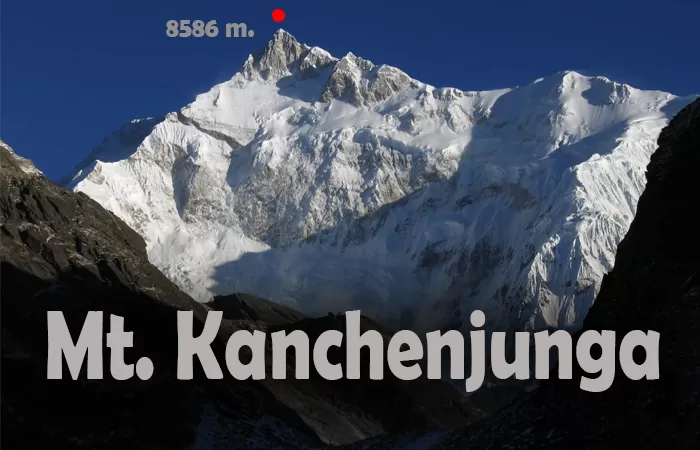
Kangchenjunga is the third-highest mountain in the world, with an elevation of 8,586 meters (28,169 feet). It is located in the eastern Himalayas, on the border between Nepal and Sikkim, India. It is also known as the ‘Five Treasures of Snow’ because of its five peaks, each representing a different aspect of nature: gold, silver, gems, grain, and holy scriptures.
Kangchenjunga is a sacred mountain for the people of Nepal and Sikkim, who believe that it is the abode of a powerful deity. The first attempt to climb the mountain was in 1905 by a British expedition, but they failed to reach the summit. The first successful ascent was in 1955 by a British team led by Charles Evans, who stopped a few meters below the summit out of respect for the local beliefs. Since then, many climbers have followed this tradition and left the summit untouched.
Kangchenjunga is a challenging and dangerous mountain to climb, requiring technical skills, physical endurance, and acclimatization. The most common route is the Southwest Face, which involves crossing glaciers, rock bands, ice falls, and steep slopes. The best season to climb Kangchenjunga is from April to May and from September to October, when the weather is more stable and the risk of avalanches is lower. A climbing permit and a liaison officer are required for the expedition.
Kangchenjunga is not only a majestic and awe-inspiring mountain, but also a rich and diverse ecosystem. It is home to many rare and endangered species of flora and fauna, such as the snow leopard, the red panda, the Himalayan black bear, the orchid, and the rhododendron. The mountain is part of the Kangchenjunga Conservation Area in Nepal and the Khangchendzonga National Park in India, both of which are recognized as UNESCO World Heritage Sites.
